





E-Invoicing in the UAE is transforming the way businesses create, exchange, and manage invoices as the country continues its journey toward becoming a fully digital economy. Following the successful implementation of Value Added Tax (VAT) and Corporate Tax, the UAE Ministry of Finance (MoF) is introducing a nationwide electronic invoicing framework designed to modernize invoicing, enhance tax transparency, and streamline business operations.
Unlike traditional invoices sent as paper documents or PDF files, e-invoices are created, exchanged, and processed in a structured digital format that allows accounting systems to communicate seamlessly. This reduces manual work, minimizes errors, improves VAT compliance, and enables faster invoice processing.
The UAE’s e-invoicing initiative aligns with global digital tax practices already adopted in countries such as Saudi Arabia, Singapore, Italy, and India. Businesses operating in the UAE should begin preparing now to ensure a smooth transition and avoid potential compliance issues once mandatory implementation begins. In this comprehensive guide, we’ll explain what e-invoicing is, why it matters, who will be affected, and the latest E-Invoicing in the UAE Implementation Timeline and deadlines announced by the UAE authorities.
What is E-Invoicing in the UAE?
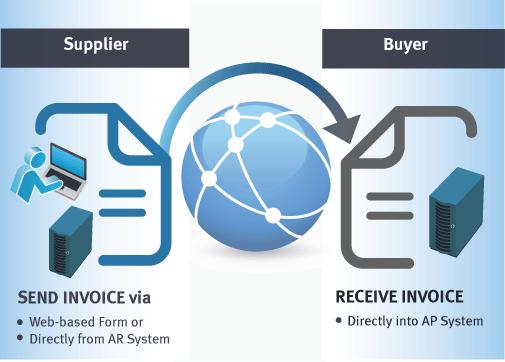
E-invoicing in the UAE (Electronic Invoicing) is the digital creation, exchange, validation, and storage of invoices in a structured electronic format. Unlike PDF invoices sent by email, an e-invoice contains machine-readable data that accounting software and business systems can process automatically.
A compliant electronic invoice is generated digitally from the seller’s accounting system and transmitted through an approved electronic network to the buyer. This enables faster validation, improved accuracy, and better tax reporting.
An e-invoice typically includes:
- Supplier and customer details
- VAT registration numbers
- Invoice number and date
- Product or service description
- Taxable amount
- VAT amount
- Total invoice value
- Payment details
Because the data is standardized, businesses can automate invoice processing, reduce administrative work, and improve financial reporting.
Why is E-Invoicing in the UAE Being Introduced?
The UAE government aims to strengthen its digital tax ecosystem by implementing a secure and standardized electronic invoicing framework.
The key objectives include:
- Enhancing VAT compliance
- Reducing tax fraud
- Improving transparency in business transactions
- Simplifying invoice processing
- Supporting digital transformation
- Increasing operational efficiency
- Aligning with international best practices
The initiative is part of the UAE’s broader vision to build a smart, technology-driven economy while making tax administration more efficient for businesses and government authorities alike.
For businesses, this means fewer manual processes, better record management, and greater accuracy in financial reporting.
How Does the E-Invoicing in the UAE Framework Work?
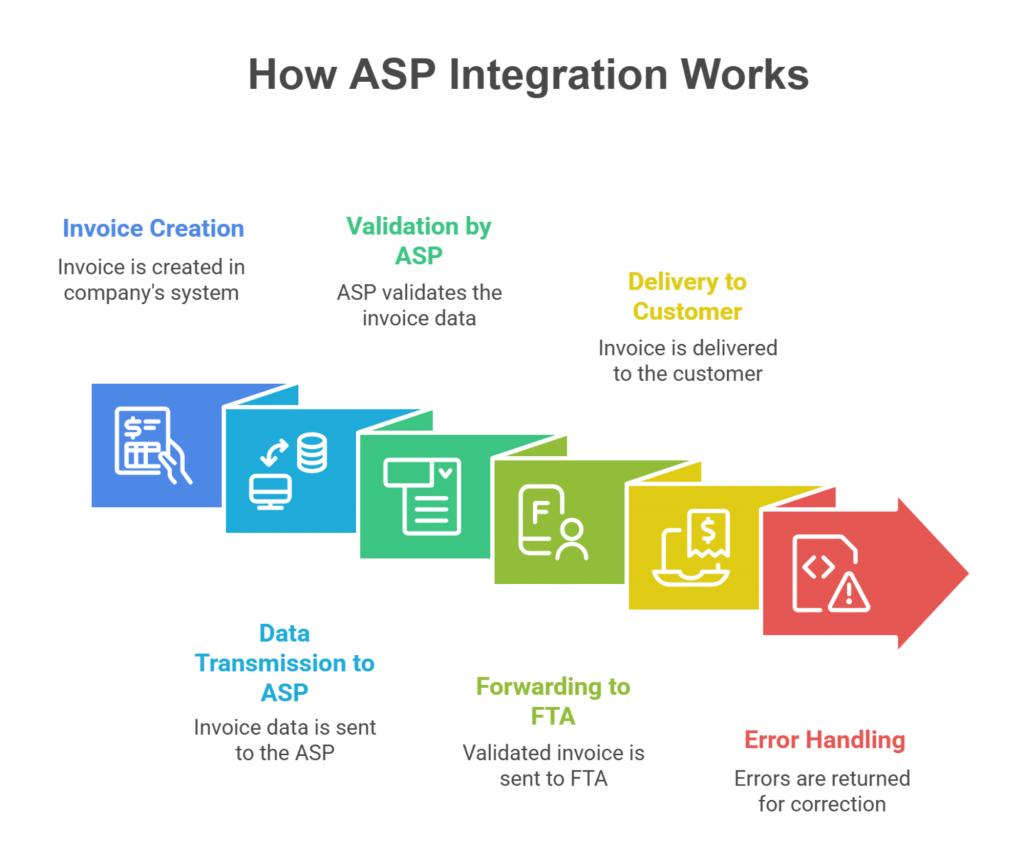
The UAE has adopted a Decentralized Continuous Transaction Control and Exchange (DCTCE) model. Under this framework, invoices are exchanged electronically through Accredited Service Providers (ASPs) rather than being sent directly between businesses.
Here’s how the process works:
- The supplier creates an electronic invoice using compatible accounting or ERP software.
- The invoice is transmitted to an Accredited Service Provider (ASP).
- The ASP validates the invoice against the UAE’s technical requirements.
- The validated invoice is securely delivered to the buyer.
- The invoice data is exchanged in accordance with the Ministry of Finance‘s framework.
This decentralized approach allows businesses to continue using their preferred accounting systems while ensuring invoices meet the required technical standards.
Who Needs to Comply with E-Invoicing in the UAE ?
The UAE plans to introduce e-invoicing in phases, with different categories of businesses joining the system over time.
Businesses expected to be affected include:
- VAT-registered businesses
- Mainland companies
- Free Zone companies
- Small and medium-sized enterprises (SMEs)
- Large corporations
- Financial institutions
- Professional service firms
- Retail businesses
- Import and export companies
- Government suppliers
Even if your business is not included in the first phase, preparing early can help reduce implementation costs and ensure a smoother transition.
Major UAE E-Invoicing Timelines & Deadlines
The Ministry of Finance has outlined a phased implementation approach to ensure businesses have sufficient time to prepare.
Key Milestones
| Date | Milestone |
| 30 October 2026 | Businesses with annual revenue of AED 50 million or more are required to appoint an Accredited Service Provider (ASP). |
| 1 January 2027 | Mandatory e-invoicing begins for businesses with annual revenue of AED 50 million or more. |
| 31 March 2027 | Businesses with annual revenue below AED 50 million and government entities are required to appoint an ASP. |
| 1 July 2027 | Mandatory e-invoicing begins for businesses with annual revenue below AED 50 million. |
| 1 October 2027 | Government entities enter the mandatory e-invoicing framework. |
These dates provide businesses with a clear roadmap for planning software upgrades, staff training, and compliance activities. As the rollout progresses, companies should continue monitoring official Ministry of Finance announcements for any updates.
Why Businesses Should Start Preparing Now?
Although mandatory implementation is being introduced in phases, waiting until the final deadline may lead to unnecessary pressure, increased costs, and operational challenges.
Early preparation allows businesses to:
- Assess existing accounting and ERP systems.
- Identify software upgrades or integrations that may be required.
- Understand the UAE’s technical invoicing requirements.
- Allocate budget for implementation.
- Train finance and accounting teams.
- Test invoice generation and exchange processes.
- Minimize disruptions when mandatory compliance begins.
Preparing in advance also provides an opportunity to improve overall financial processes and strengthen internal controls.
How Businesses Can Prepare for E-Invoicing in the UAE
To ensure a smooth transition, businesses should take a proactive approach by reviewing their current invoicing processes and technology.
Key preparation steps include:
1. Review Your Accounting Software
Confirm whether your accounting or ERP system can generate structured electronic invoices and integrate with Accredited Service Providers.
2. Evaluate Existing Invoice Processes
Identify manual processes that can be automated to improve efficiency and reduce errors.
3. Monitor Official Updates
Stay informed about implementation requirements, technical specifications, and compliance obligations issued by the Ministry of Finance.
4. Train Your Finance Team
Provide training to employees responsible for invoicing, accounting, VAT reporting, and compliance to ensure they understand the new requirements.
5. Choose the Right Technology Partner
Work with a trusted accounting, tax, or technology advisor to assess your readiness and support implementation.
Transitioning to e-invoicing is more than a compliance exercise—it is an opportunity to modernize financial operations, improve efficiency, and support long-term business growth.
Benefits of E-Invoicing in the UAE
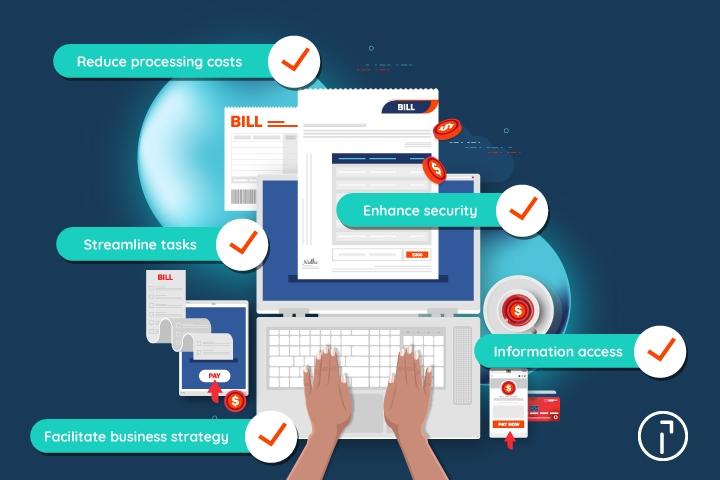
Implementing E-Invoicing in the UAE offers more than regulatory compliance—it enables businesses to streamline operations, improve financial accuracy, and enhance overall efficiency. By replacing manual invoicing processes with a structured digital system, organizations can save time, reduce costs, and strengthen their financial controls.
Here are some of the key benefits:
1. Faster Invoice Processing
Electronic invoices are created, transmitted, and received instantly, significantly reducing processing times. This allows businesses to speed up approvals and improve payment cycles.
2. Improved Accuracy
Manual data entry often leads to errors such as duplicate invoices, incorrect VAT calculations, or missing information. E-invoicing minimizes these mistakes by automating invoice creation and validation.
3. Better VAT Compliance
Structured electronic invoices help businesses maintain accurate VAT records, making tax reporting easier and reducing the risk of non-compliance.
4. Reduced Operational Costs
Businesses can lower expenses associated with printing, paper storage, courier services, and manual invoice handling.
5. Enhanced Security
Electronic invoices are exchanged through secure, accredited networks, reducing the risk of invoice fraud, document tampering, or data loss.
6. Improved Cash Flow
Faster invoice delivery and processing can help businesses receive payments more quickly, improving cash flow and financial planning.
7. Better Business Insights
Digital invoicing enables businesses to generate real-time financial reports and analyse invoicing trends, supporting informed decision-making.
Common Challenges Businesses May Face
While e-invoicing offers many advantages, businesses may encounter certain challenges during implementation.
Legacy Accounting Systems
Older accounting software may not support structured electronic invoices or integration with the UAE’s framework.
System Integration
Businesses may need to integrate ERP systems, accounting software, and Accredited Service Providers (ASPs), which can require technical expertise.
Employee Training
Finance and accounting teams must understand the new invoicing requirements and updated workflows.
Data Migration
Historical invoice data may need to be reviewed and migrated to ensure consistency and accuracy.
Supplier and Customer Readiness
Successful implementation also depends on trading partners being prepared to exchange electronic invoices through compatible systems.
Planning ahead and working with experienced advisors can help businesses overcome these challenges with minimal disruption.
Compliance Considerations
As the UAE’s e-invoicing framework is introduced in phases, businesses should monitor official announcements from the Ministry of Finance and ensure they are ready before their applicable implementation date.
To remain compliant, businesses should:
- Use accounting software compatible with the UAE e-invoicing framework.
- Appoint an Accredited Service Provider (ASP) within the required timeframe.
- Generate invoices in the prescribed structured format.
- Maintain accurate invoice records.
- Train finance teams on updated invoicing procedures.
- Stay informed about future technical and regulatory updates.
Taking a proactive approach will help businesses transition smoothly while reducing compliance risks.
Best Practices for a Smooth Transition
To prepare effectively for e-invoicing, businesses should consider the following best practices:
- Conduct an internal assessment of your current invoicing process.
- Review ERP and accounting software compatibility.
- Establish a clear implementation plan.
- Train employees involved in finance and accounting.
- Test electronic invoice generation before mandatory implementation.
- Work with experienced accounting and tax consultants for guidance.
- Keep up to date with Ministry of Finance announcements and implementation updates.
Frequently Asked Questions About E-Invoicing in the UAE
Is e-invoicing mandatory in the UAE?
The UAE is introducing mandatory e-invoicing in phases. Businesses should determine which implementation phase applies to them and prepare accordingly.
What is the difference between a PDF invoice and an e-invoice?
A PDF invoice is simply a digital copy of a paper invoice. An e-invoice is created in a structured electronic format that accounting systems can automatically read and process.
Who needs to comply with UAE e-invoicing in the UAE?
The framework is expected to apply to VAT-registered businesses, including mainland companies, free zone entities, SMEs, large enterprises, and government suppliers, according to the phased implementation schedule.
What is an Accredited Service Provider (ASP)?
An Accredited Service Provider is an approved intermediary that securely validates and exchanges electronic invoices between businesses in accordance with the UAE’s e-invoicing framework.
Can small businesses use e-invoicing in the UAE?
Yes. Small and medium-sized enterprises will also be included in the phased implementation and should prepare their accounting systems in advance.
What are the benefits of implementing e-invoicing in the UAE early?
Early preparation allows businesses to upgrade systems, train staff, test processes, and ensure a smoother transition before their mandatory compliance date.

Conclusion
The introduction of E-Invoicing in the UAE marks a significant step in the country’s digital transformation and tax modernization strategy. While implementation will take place in phases, businesses should not wait until the final deadline to begin preparing.
Reviewing your accounting systems, understanding the implementation timeline, training your finance team, and selecting the right technology solutions today will help ensure a seamless transition tomorrow.
Businesses that prepare early can not only meet compliance requirements but also benefit from greater efficiency, improved financial accuracy, faster invoice processing, and stronger cash flow management.
As the UAE continues to embrace digital innovation, e-invoicing will become an essential part of doing business. Taking proactive steps now will position your organization for long-term success.